

A program held with the theme policy, infrastructure and the structural role of GIX which Ghana Internet Exchange (GIX), legislators, and technology experts have reiterated their commitment to strengthening the country’s digital infrastructure, with a particular emphasis on increasing the capacity and reach of the Ghana Internet Exchange (GIX).
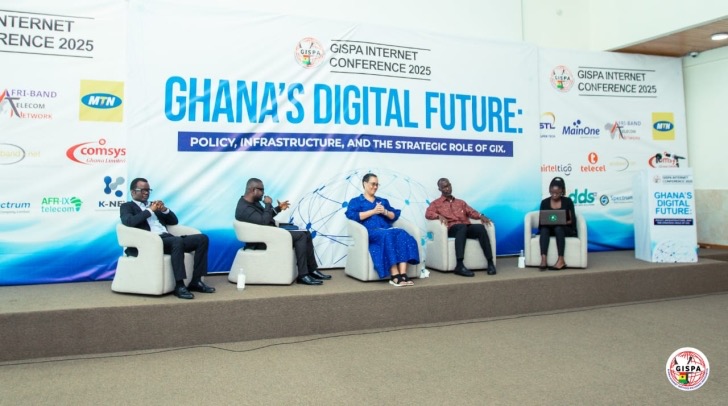
The pledge comes after two days of deliberations at the Ghana Internet Service Providers Association (GISPA) Conference 2025 in Accra.
Policy, Regulatory, and Investment Measures
The conference, themed “Ghana’s Digital Future: Policy, Infrastructure, and the Strategic Role of GIX,” brought together key players in the internet ecosystem to discuss the policy, regulatory, and investment measures required to support Ghana’s expanding digital economy.Ghana’s internet market is expanding quickly.
Internet Penetration, Broadband Access, and Fibre Deployments
according to figures from the National Communications Authority, internet penetration will top 70% in 2024. Wider broadband access and ongoing fibre deployments were the main drivers of the increase. Additionally, data usage rose by over 30% annually, indicating the increasing importance of digital services in public administration, commerce, education, and leisure.
The Need for High-Capacity and Resilient Infrastructure
The need for high-capacity, resilient infrastructure, including a more robust GIX, has increased due to the rapid rise in demand.
Industry Cooperation and Capacity Building
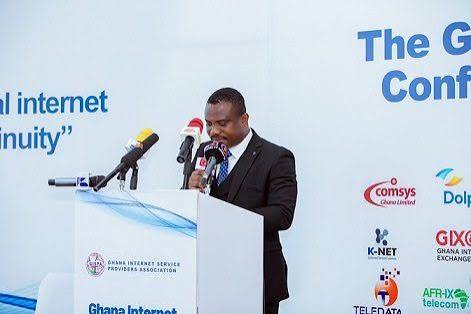
GISPA President Michael Komla Kumah Nfordzo opened the meeting by urging increased industry cooperation to meet the country’s digital demands. He claimed that the first day of the conference’s hands-on technical training illustrated the significance of ongoing capacity building. “Our industry needs to continue being innovative, proactive, and focused on shared objectives,” he stated. The robustness, adaptability, and creativity of the infrastructure we construct today will determine Ghana’s digital future. As service providers, we are aware that our role goes beyond simply providing connection; it also involves empowering businesses, facilitating national growth, and assisting the millions of Ghanaians who depend on the internet for social engagement, employment, education, and health.
Interconnection, Public Institutions, and Banking Networks
GISPA is increasing its involvement with the government, he continued, especially with regard to interconnection issues that impact public institutions, banking networks, and other state organisations. He expressed optimism that continued talks with the Ministry of Communications would result in noticeable enhancements to the resilience of the national network. Significant attention was also drawn to the NCA’s recent revision of its annual regulatory fee structure.
Regulatory Fee Structure and Commercial Realities
Industry participants applauded the change from a flat rate to a 0.5% charge on net sales for internet and public data service providers, seeing it as a more equitable and long-lasting structure that balances legal requirements with commercial realities. Read more on Government of Ghana Launches Initiative Giving Students Free AI Access.
Government Commitment to Digital Transformation
Sam Nartey George, Minister of Communications, Digital Technology, and Innovation, underlined in his keynote speech the importance of the private sector in accomplishing Ghana’s digital transformation objectives. “Your discussions today directly influence Ghana’s digital transformation agenda,” he stated. “Government remains committed to expanding dependable broadband, improving quality and affordability, removing infrastructure bottlenecks, and strengthening digital public services,” he continued.
Expanding the GIX and Regional Integration
The Minister emphasised that the Ministry and GISPA are working together to increase connections to the GIX, enhance redundancy for public institutions and banking networks, and further Ghana’s goal of becoming a regional digital hub. He pointed out that expanding the GIX beyond Accra would enhance user experience across the country and cut down on latency and transportation expenses. Additionally, he cited Ghana’s growing fibre network as a solid basis for cross-border traffic exchange, which might strengthen regional integration and open up new business prospects for service providers.
Cross-Border Connectivity and Ghana’s Internet Infrastructure
Over the course of the two-day event, panel discussions examined the potential for cross-border connectivity, the commercial benefits of more GIX participation, and the future of Ghana’s internet infrastructure.
Conclusion
The discussions at the GISPA Conference 2025 emphasized Ghana’s strong commitment to building a resilient, high-capacity digital infrastructure to support the nation’s growing digital economy. With rising internet penetration, increasing data usage, and expanding fibre networks, strengthening the Ghana Internet Exchange has become a strategic priority for the various networks. Collaboration between government, regulators, and private sector stakeholders remains essential to improve connectivity, reduce latency, and enhance service quality nationwide. Ongoing policy reforms, fair regulatory frameworks, and investments in capacity building will further support this vision. With all said Together, these efforts position Ghana to advance digital inclusion, support innovation, and emerge as a competitive regional digital hub. Read more on GhIPSS will promote a cooperative strategy to combat cyber fraud in Ghana