

As Ghana works to strengthen its governance frameworks for emerging technologies, a nationwide evaluation of the country’s preparedness for AI has started using the UNESCO AI Readiness Assessment Methodology (RAM).

Ghana Launches Nationwide AI Readiness Evaluation Using UNESCO RAM
The European Commission-funded project was introduced in Accra with involvement from governmental organisations, academic institutions, civil society organisations, and partners in the corporate sector.
The government is dedicated to implementing AI in a secure, open, and inclusive manner, the Minister for Communication and Technology Hon SAM George raised the following points, which he also explain them to the audience and the citizens of Ghana a namely below :
- Gyekyi warned of potential concerns,
- Including bias
- data privacy violations
- workforce upheaval
- AI may improve the Sustainable Development Goals (SDGs)
- improve healthcare systems
- assist climate action.

This analysis that was made will look at Ghana’s digital infrastructure, human resources, regulatory framework, and educational capabilities. The results are enough to inform the nation’s upcoming National AI Strategy by directing the creation of new governance frameworks and bolstering oversight of AI systems. Read Government of Ghana Launches Initiative Giving Students Free AI Access
Ghana also introduced Full National AI Strategy at ENJOY AI 2025
At the African Open event which was held in Accra in September 2025, the full National AI Strategy was formally announced. Again they talked about supporting ethics, inclusivity, and digital sovereignty, the final strategy outlines Ghana’s framework for the use of AI across priority areas, such as public administration, health, education, and agriculture.
UNESCO talked about Cultural Foundations for AI Development
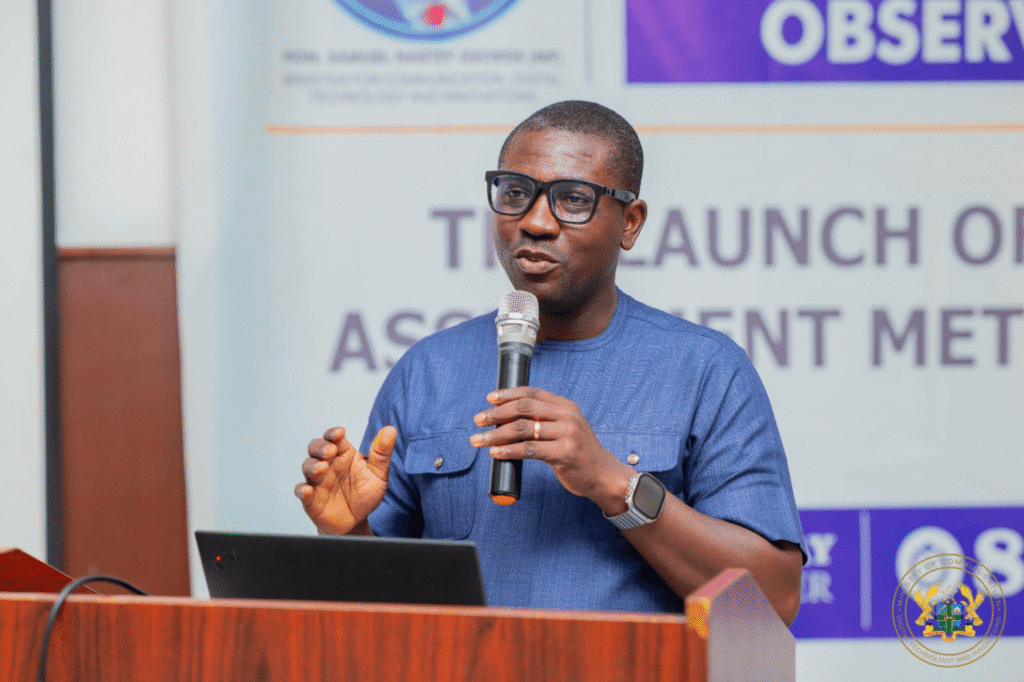
A member set to speaking on behalf of the UNESCO Representative and he said that AI deployment must be anchored by ethical safeguards. They highlighted Ghana’s honour as one of just two African countries chosen for the AI readiness evaluation. He underlined the necessity of AI systems that comprehend regional languages, customs, and values and stressed the significance of basing AI development in the cultural and ethical realities of Africa.
He went on by saying that although AI has the potential to revolutionise public administration, healthcare, education, and culture, it must be developed in accordance with fairness and human rights to avoid discrimination. He emphasised the practical difficulties in implementing AI, particularly with regard to infrastructure and digital literacy, by sharing views on the significance of data availability and the requirement to make sure AI is in line with the country’s social and cultural environment.
UNESCO RAM Methodology and Ghana’s AI Governance Framework
A standard for the sustainable and responsible deployment of AI is provided by UNESCO’s AI readiness methodology, which assesses nations based on policy, infrastructure, skill development, and societal effect. The RAM consists of both quantitative and qualitative questions intended to collect data on several aspects of a nation’s AI ecosystem, such as legal and regulatory, social and cultural, economic, scientific and educational, and technological and infrastructural aspects.
Collaboration Across Sectors to Develop Ghana’s AI Strategy
In order to create a reliable AI ecosystem that can sustain long-term economic growth, Ghana’s AI strategy must be in line with international ethical standards and depend on cooperation between the government, business, academia, and civil society, according to Emmanuel Ofori, Director of Innovations at the ministry. Ghana’s National AI Strategy was presented by Executive Director of the Data Protection Commission (DPC), with an emphasis on the organization’s goal of employing AI to advance national development. She also gave a speech saying that the plan is based on a number of important aspects, such as increasing capacity, using AI ethically, and encouraging innovation and research. With AI solutions that address the nation’s distinct cultural and social demands as well as economic growth, the goal is to establish Ghana as a leader in AI on the continent.
Government Introduces Emerging Technologies Bill
An Emerging Technologies Bill to control robotics, blockchain, and artificial intelligence has been announced by the government. Currently in draft form, the proposed legislation seeks to strengthen accountability procedures for the use of AI while establishing ethical and data protection norms.
Conclusion
The RAM exercise’s ultimate product is a country report that gives a thorough review of the nation’s AI preparation state, summarises its position on each dimension, describes ongoing initiatives, and offers specific policy recommendations on how to close governance gaps. Read more on The government gives Ghanaian students free access to AI