
In August 2025, the Africa Quantum Consortium (AQC) was launched, marking the first time specialists from across the continent came together to collaborate on quantum science, education, innovation, and policy in a single, coordinated effort
Introduction
Africa is building AI through Strong infrastructure with the help of quantum computing to tackle the main challenges in the health sector, agriculture, energy, and security. When talking about Africa Quantum Consortium leading coordinated research, education, and policy efforts, Africa is positioning itself for meaningful progress through scientific and technological advancement.
Formation of the Africa Quantum Consortium (AQC)
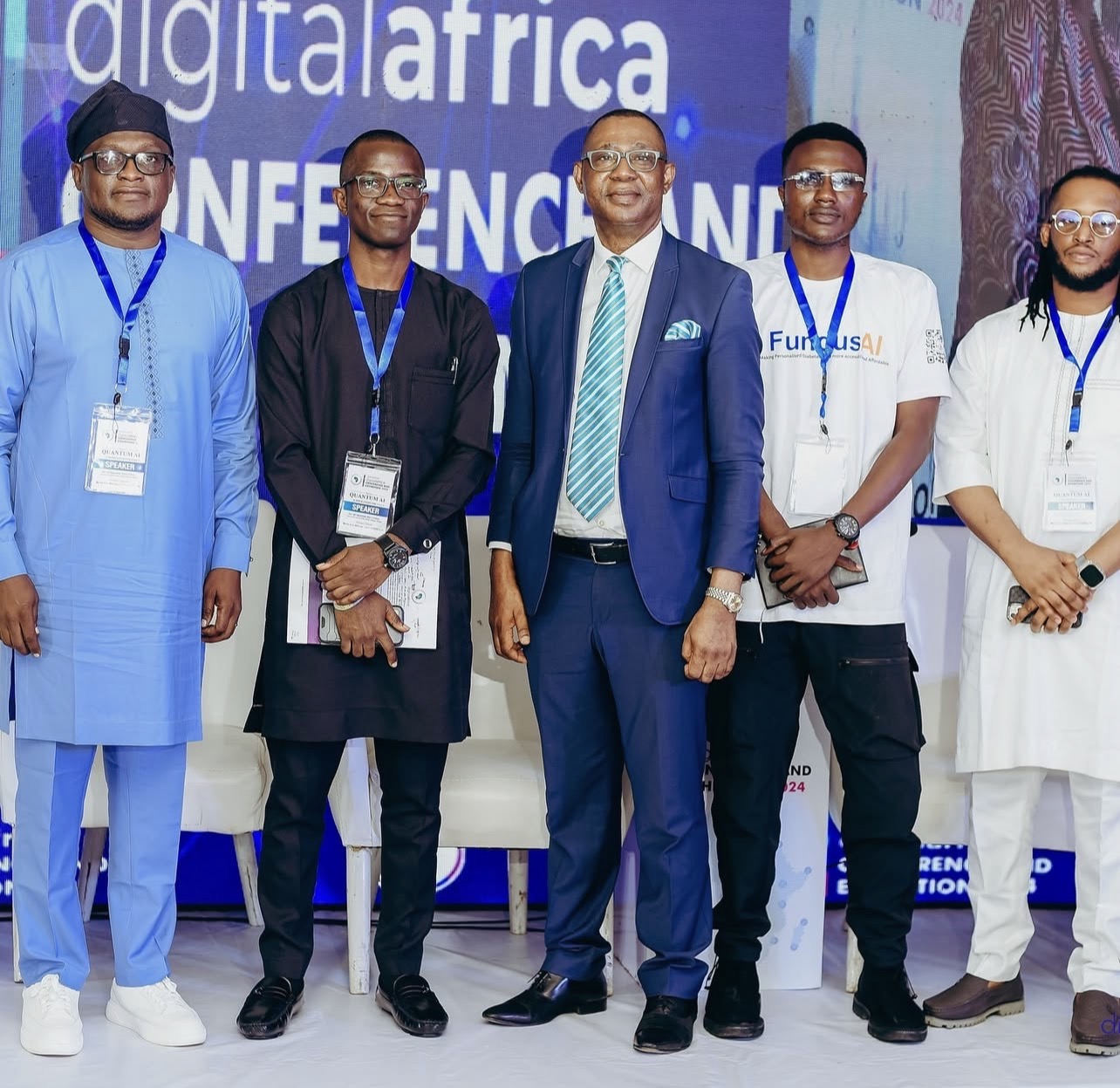
In order to turn dispersed efforts into continental power, the program unites scientists, decision-makers, and business executives from all 54 of Africa’s countries. The collaboration has already started proving in practical ways. A Quantum Circle has been created to provide support for women and girls interested in such field. The group has also begun hosting roundtable sessions to bring experts together for open discussions, and it has finalised its legal registration in South Africa to anchor its work across the continent.
Quantum Computing and Its Growing Importance
Quantum computing is driven by two ideas from quantum physics—superposition and entanglement. These allow qubits to handle multiple possibilities at once, giving them far more range than the on-and-off limitations of normal computer bits.
- When this emerging technology is paired with artificial intelligence, the potential becomes even greater. It could help strengthen digital security, push medical research forward at a faster pace, and improve the accuracy of climate predictions—developments that would benefit many African countries facing real challenges in these areas.According to industry commentators, quantum advantage—the ability of quantum computers to solve problems more quickly and effectively than classical systems—may materialize by 2030.Applications for African Development
- Potential uses for the technology include areas that are vital to African development. Drug discovery for diseases like malaria and tuberculosis, which disproportionately affect the continent, can be accelerated by using quantum simulations to model molecular interactions and protein folding at a pace never before possible. Quantum algorithms can be used in agriculture to predict climate-adaptive genetics, manage water resources, and maximize agricultural yields. Quantum-enabled power grid optimization has the potential to improve energy infrastructure.
Hack the Horizon: Africa’s Continentwide Quantum Challenge
Registration for the consortium’s continentwide quantum challenge, Hack the Horizon, will open on November 20, 2025. This program connects talent across boundaries by bringing together academic researchers, software engineers, and business executives to create quantum solutions for African-specific problems. The International Year of Quantum Science and Technology’s closing ceremony in Ghana in February will celebrate the winners. Read more Government of Ghana Launches Initiative Giving Students Free AI Access
Regional Quantum Leaders in Africa
In terms of quantum research and development, a number of African countries have become regional leaders. With government funding of about 7.8 million dollars spread over five years, South Africa’s Quantum Technology Initiative began its second phase in April. Instead of building quantum computers itself, the five-university partnership concentrates on generating quantum software applications. This approach is comparable to developing smartphone applications without producing the equipment.
Quantum Leap Africa and Rwanda’s Advancements
Rwanda is emerging as a hub for quantum innovation through Quantum Leap Africa, a research center set up by the African Institute for Mathematical Sciences in Kigali. The center trains Africa’s next generation of quantum scientists while carrying out both practical projects and fundamental research.
In December 2024, the African Institute for Mathematical Sciences became part of the CERN-hosted Open Quantum Institute, giving African researchers access to world-class quantum tools and the chance to collaborate with scientists around the globe.
Ghana’s Commitment Through the 2025 Quantum AI Summit
Ghana demonstrated its commitment to technological innovation by partnering with IBM and Flapmax to host the 2025 Quantum AI Summit at Palm University College. The event featured workshops, guest lectures, and a hybrid hackathon focused on real-world challenges in health, energy, and agriculture.
Students gained hands-on experience by prototyping quantum-AI projects and working with hybrid computing platforms, giving them practical skills while positioning Ghana as an emerging hub for innovation and cutting-edge research in Africa.
Kenya’s Quantumke Program
Kenya’s quantum initiative is building skills in quantum computing, sensing, and cryptography, preparing the country for the next wave of technological innovation. Universities such as Strathmore and the University of Nairobi have started offering quantum courses within their engineering and physics programs, giving students practical, hands-on experience from an early stage.
Beyond the classroom, the project is exploring real-world applications in energy, agriculture, and data security. By linking research to local and regional development priorities, Kenya is making sure that its investment in quantum science directly benefits communities and drives national progress.
Nigeria, Egypt, and Morocco’s Expanding Quantum Research
Through universities like the University of Lagos and Ahmadu Bello University, which have set up research facilities devoted to quantum computing and cryptography, Nigeria is investigating quantum technologies. Research focuses on practical solutions for secure communications, infrastructure optimization, and urban planning. Through robust academic programs and international partnerships, Egypt and Morocco are advancing quantum research. Mohammed VI Polytechnic University, Cairo University, and the American University in Cairo are working on simulations, communications, and sensor technology.
Infrastructure and Funding Challenges
Adoption may be slowed by the continent’s serious financing and infrastructure issues. The resources needed for quantum computing—stable power, fast internet, and sophisticated computational facilities—remain unevenly dispersed throughout African countries. Cloud-based quantum platforms and specific hardware required for experimental work are not available to many organizations. Many African nations still have inadequate research resources, and quantum infrastructure is costly, necessitating ongoing investments in labs, gear, software, and research initiatives.
Another significant obstacle is the disparity in talent and education. Deep knowledge of physics, mathematics, computer science, and engineering is required for quantum computing and quantum artificial intelligence. Few African institutions provide specialized courses in these fields, and the issue is made worse by brain drain, as top talent frequently relocates elsewhere in search of further education and employment. African nations require cogent approaches to regulate quantum research, intellectual property, data protection, and international cooperation. Policy and regulatory frameworks are still in their infancy.
2025 saw a surge in global investment in quantum technology, with over 13 billion dollars added this year, totaling over 40 billion dollars. The United States, China, and the European Union are the main investors. Africa and the rest of the Global South have not yet taken part in rising investment levels. Through the International Year of Quantum designation, UNESCO hopes to increase financing and attention to developing nations.
The four strategic pillars of the Africa Quantum Consortium are Fund, Unify, Clarify, and Influence. Through networking and events, the Unify pillar fosters cross-border collaboration. To establish a common strategic direction, Clarify entails creating the State of Quantum in Africa white paper. Influence guarantees that Africa takes part in international debates that determine the priorities for research and policy. The Fund pillar focuses on raising money for infrastructure, education, and businesses via the Africa Quantum Fund.
Cloud-based quantum platforms from companies like Google, IBM, and Microsoft are lowering entry barriers and democratizing access for developers worldwide. This eliminates the need for domestic quantum hardware infrastructure, allowing African researchers and students to experiment with quantum algorithms. During the experimental stages of developing quantum hardware, hybrid quantum classical systems provide a feasible route forward.
Inclusive Participation Through the Quantum Circle and AQC Academy
Through programs like the Quantum Circle, a specialized network that supports women and girls in quantum disciplines, the consortium places a strong emphasis on inclusive participation. This ensures that the advancement of quantum technology benefits all facets of society while addressing gender disparities in STEM fields including science, technology, engineering, and mathematics. By developing organized programs that connect students to employment, mentorship, and exposure within the quantum ecosystem, the AQC Academy focuses on developing talent.
International Collaborations Strengthening Africa’s Quantum Ecosystem
International collaborations are essential to the quantum development of Africa. African researchers have access to state-of-the-art resources and knowledge sharing through partnerships with European institutions, involvement in international quantum platforms, and participation in global research networks. Through these collaborations, African priorities and sovereignty over developing technologies are preserved while national quantum activities are transformed into continental capabilities.
Through quantum key distribution, quantum cryptography provides nearly unbreakable encryption, which is an essential tool for African governments, banks, and tech firms dealing with growing cyberthreats. As the continent adopts mobile finance, electronic government services, and connected infrastructure, protecting sensitive data while fostering digital economies is crucial. Financial institutions and telecommunications can be protected against new risks from future quantum computers that can crack existing encryption standards by using quantum safe cryptography.
There is more to the momentum than just catching up to developed countries. Africa presents itself as an active contributor to global innovation rather than just a consumer by directly interacting with cutting-edge technologies through cloud platforms, hybrid processes, and regional partnerships. Opportunities to build quantum applications addressing issues pertinent beyond of Africa’s borders are created by the continent’s particular concerns in agriculture, healthcare, energy, and climate adaption.
Future Outlook Toward 2030 and Beyond

According to predictions, by 2030, quantum AI would have a quantum advantage in significant business issues, upending industries like environmental modeling, materials research, medicines, and finance. In this approaching quantum future, Africa and other developing economies may be empowered by persistent engagement that combines international knowledge sharing with domestic innovation. Infrastructure deficiencies must be filled, steady finance must be obtained, local talent must be developed, and policy coordination must be maintained.
Conclusion
Africa’s growing focus on quantum computing and AI shows a strong commitment to innovation. By strengthening collaboration, talent development, and research networks, the continent is laying the groundwork for future breakthroughs and long-term digital growth.Read more on Top AI Tools in 2025: How Artificial Intelligence Is Changing the Way We Work